What is a brand guide and why do you need one?
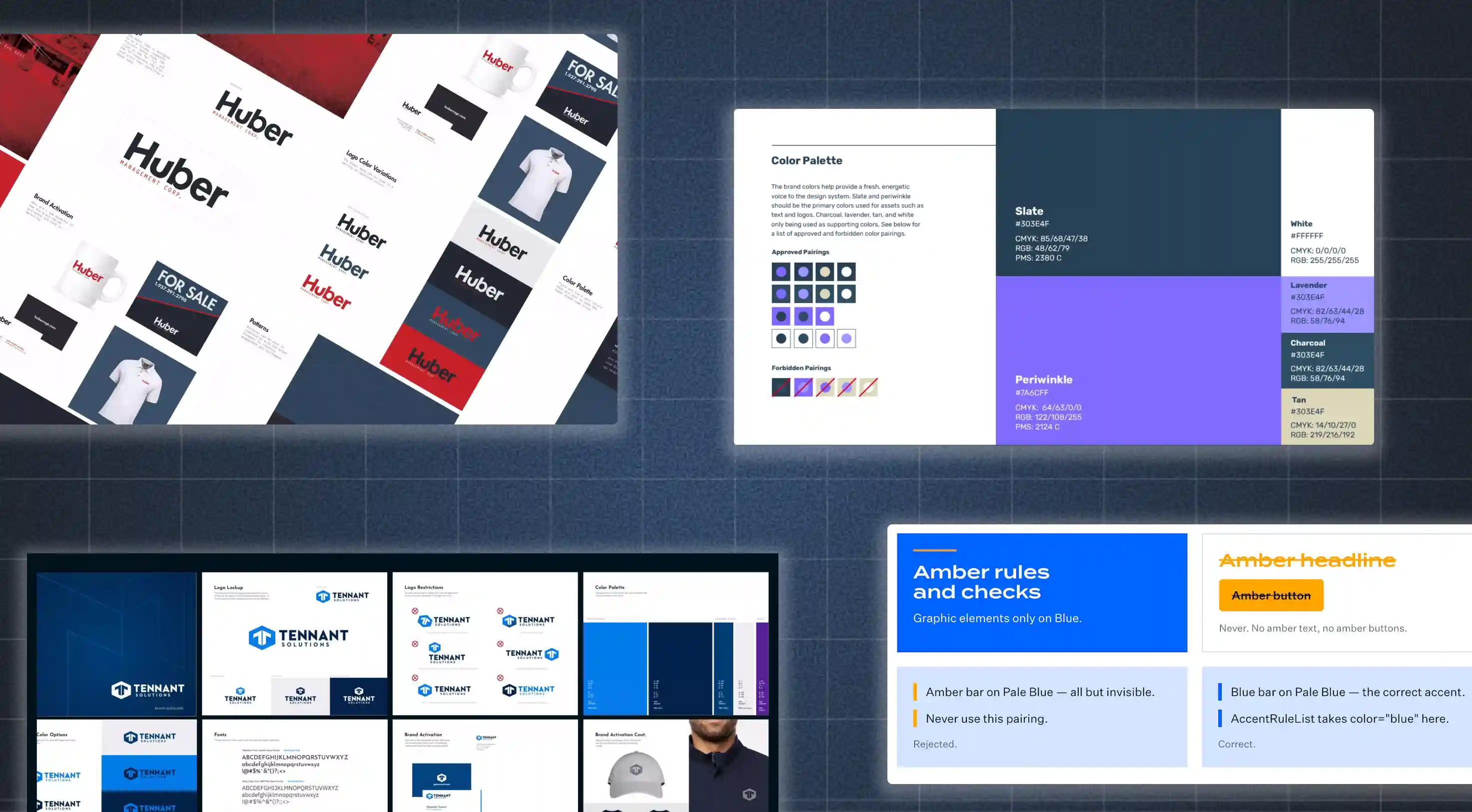
Building a brand guide is the first step to making a great impression.
Your company’s brand guide (also known as a brand style guide or brand identity manual) is the instruction manual for how you present yourself to customers, competitors, and anyone else who interacts with your business.
It’s great for keeping everyone on the same page internally, and it comes in handy for external use when you’re working with contractors.
Brand guides establish clear rules for:
- Visuals
- Messaging
- Overall tone of content
- Look and feel for website pages
- Guidelines for social media graphics
- Packaging design
- Internal communications
- And more!
The ultimate goal of a brand guide is to ensure your digital and print materials look and feel cohesive so people can recognize you.
What’s Included in a Brand Guide?
Brand guides can range in size from a single sheet to a 50+page PDF. Regardless of length, most guides cover these five core areas:
- Logo Guidelines: Proper usage of primary and secondary logos, minimum sizes, clear space requirements, and "don'ts.”
- Color Palette: Exact color codes for both digital and print formats, including HEX codes (web), RGB (screens), CMYK (printing), and Pantone values.
- Typography: The specific primary and secondary fonts used for headings, body copy, and UI elements, along with rules about their hierarchy.
- Brand Voice & Tone: Language guidelines that describe how the brand speaks (formal, playful, authoritative, witty etc.) along with word choice examples.
- Imagery & Visual Style: Photography style, icon sets, illustration rules, and graphic treatments that fit the brand aesthetic.
Why Are Brand Guides Important?
Brand guides are important for three main reasons:
- Consistency: Guides eliminate visual drift over time as different team members or agencies create assets.
- Recognition: Repetitive use of identical colors, fonts, and messaging builds immediate brand recognition with important audiences.
- Efficiency: Designers and writers don't have to guess about which colors, fonts, or tone to use for every new project; they can simply check the reference manual and get to work completing something that looks consistent.
What Should Not Be Included in a Brand Guide?
Bloated or over-engineered brand guides often get ignored by the very people meant to use them. They become too chaotic and dense, tempting people to disregard them. A great brand guide should be a lean document, not an exhaustive encyclopedia.
Exclude the following from a brand guide to keep it practical, clear, and actionable:
- Hyper-Rigid Rules: Give creators parameters, not handcuffs. Banning common words, or requiring specific font sizes down to the pixel can be limiting.
- A Mish-Mash of Assets: A brand guide should define rules and specs, not act as a messy file dumping ground.
- Short-Term Data: Brand guides define enduring rules, while campaigns change constantly. Mixing the two creates immediate confusion about what is permanent.
How is a brand guide different from a brand strategy?
While a brand guide and a brand strategy are closely connected, they answer two fundamentally different questions for a business.
Brand Strategy is the blueprint. It defines who your company is, who you serve, what you promise, and how you plan to succeed.
Brand Guide is the execution tool. It provides visual and verbal rules so that anyone creating a piece of content for the brand knows exactly how it should look, feel, and sound.
A brand strategy always comes first. If you try to build a brand guide without a strategy, you end up with pretty design choices that don't actually communicate anything meaningful or differentiate you from competitors.
Should every organization have a brand guide?
Every organization needs some sort of brand guidance. But, not every organization needs a massive, formal document. Whether you run a global enterprise, a local non-profit, or a two-person startup, having a centralized record of your visual and verbal rules prevents brand dilution.
Here is what your brand guide should look like at each stage of your business:
Solo Founders & Early-Stage Startups: When you're small, speed matters more than complex rules. However, you still need quick access to your exact color codes and font files so you don't waste time looking them up every time you create a slide deck or social post. Make a quick brand sheet for reference.
Growing Teams (10–50 Employees): At this stage, you start delegating content creation to multiple employees, freelancers, or external agencies. Without clear rules, your marketing materials will quickly start looking mismatched. Build a 5-to-10 page brand guide PDF.
Mature Enterprises & Multi-Department Organizationss: Hundreds of internal employees and regional vendors are generating assets independently. A static PDF quickly gets outdated, so companies often build live, web-based style portals.
Build Your Brand Guide
If you need help building a brand guide, get in touch. Our designers would be happy to help!